
A compliment on beauty produces very different effects depending on its formulation. Between a generic remark (“you are beautiful”) and a precise observation about a personal choice, the difference in reception is measurable. Feedback from professionals in personal development confirms this disparity: contextualized compliments generate a significantly higher positive response than ready-made phrases.
Complimenting beauty: what cultural approaches reveal
The intercultural dimension of compliments profoundly alters their reception. The study “Compliments Across Cultures” from the University of Tokyo, published in April 2026, highlights marked differences between Western and East Asian traditions.
| Criterion | Western Approach | East Asian Approach |
|---|---|---|
| Target of the compliment | Eyes, smile, silhouette | Harmony of features, complexion, “porcelain skin” |
| Language register | Direct, often just an adjective (“gorgeous”) | Symbolic, reference to an aesthetic ideal |
| Preferred context | Flirting, romantic relationship | Social recognition, respect |
| Reception of a direct physical compliment | Generally well-received in private context | Can create discomfort if too direct |
This table shows that the target and register of the compliment vary by culture. A sincere compliment on beauty is not just about finding the right adjective: it requires understanding the context in which the person receives this remark. To delve deeper into these nuances, you can read beauty tips on Mes Petites Beautés before putting them into practice.

Complimenting a choice rather than appearance: the most reliable technique
The qualitative survey conducted among 500 personal development coaches, published by the French Association for Personal Development in November 2025, points to a clear finding. Compliments on beauty lose effectiveness if they do not recognize a personal effort. Hairstyle, makeup, outfit, accessory: these are choices, and valuing them produces a much more lasting effect than a remark on an immutable physical trait.
The difference lies in the psychological mechanics. A compliment on the eyes or smile, no matter how sincere, pertains to something the person did not choose. In contrast, a compliment on a hairstyle or clothing style values a decision, a taste, an intention.
How to formulate a compliment on a personal choice
- Precisely name what you noticed: “This nail polish color really suits you” rather than “you have pretty hands.”
- Associate the observation with a context: “This scarf highlights your face in the evening light” anchors the compliment in a real moment.
- Avoid generic superlatives (“the most beautiful,” “absolutely stunning”) that sound like automatic phrases.
- Leave a silence after the compliment, without trying to justify or repeat it.
A precise compliment on a chosen detail is worth three vague compliments on the whole. Specificity proves the attention given, and attention is the true message behind any sincere compliment.
Compliments on beauty at work: the regulatory limit to know
Since the adoption of the European directive on harassment in 2024, professional environments are increasingly strictly regulating remarks about physical appearance. The Official Journal of the EU, in its March 2025 edition, confirms this trend aimed at preventing micro-aggressions.
In practical terms, a compliment on appearance in the office can be reclassified as inappropriate behavior, even if the intention was benevolent. The professional setting requires a different approach than the private sphere.
What remains appropriate in a professional context
Compliments regarding a skill, result, or effort remain perfectly suitable. “Your presentation was clear” or “your report changed the way we approach this case” value the person without crossing the boundary of appearance.
If you want to highlight a visual aspect, a compliment on a clothing choice made in a formal context is better received than a comment on appearance: “This jacket is very elegant” usually poses no problem. The test to apply: could this compliment appear in a written professional exchange without discomfort?
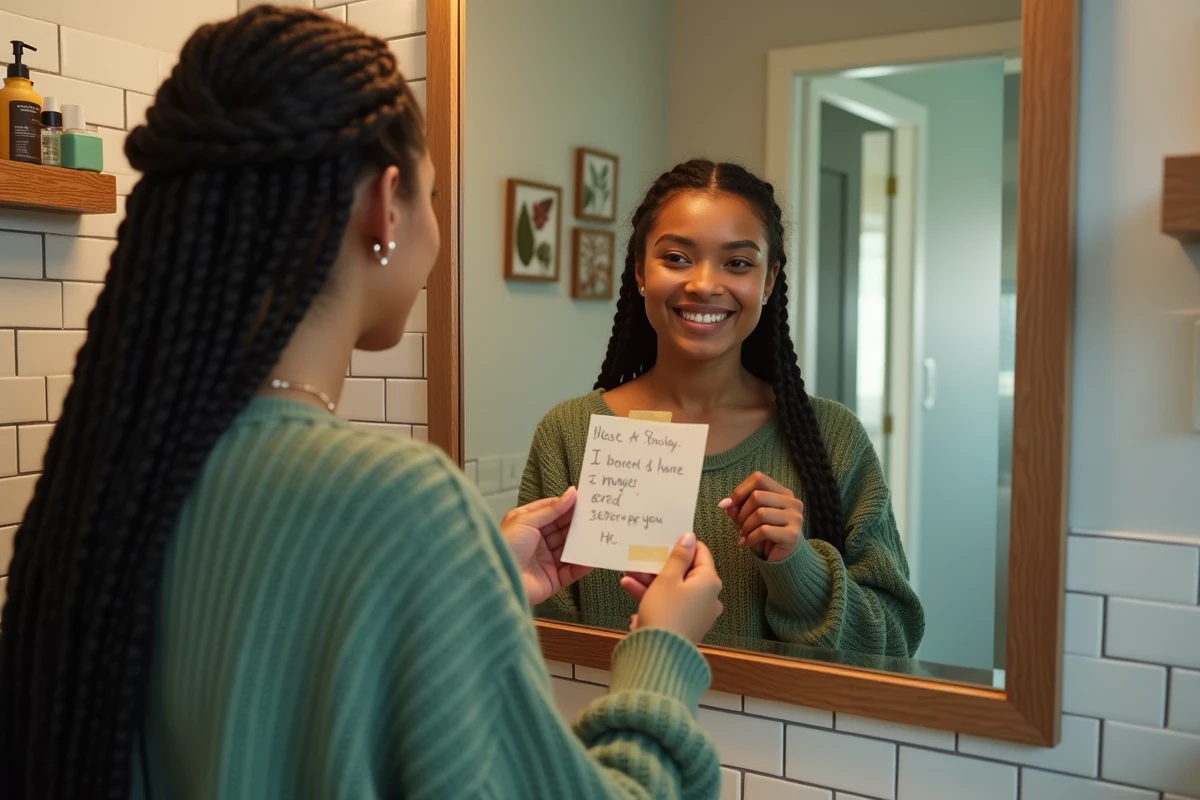
Natural beauty and authenticity: the shift of 2025-2026
Recent data from the cosmetics sector document a fundamental trend. Influencer campaigns on TikTok have accelerated a movement towards valuing natural and inclusive beauty, countering the unrealistic standards that dominated social media.
This evolution directly modifies the way a compliment is received. Formulations that value authenticity resonate more than those that compare to an ideal. “Your face without makeup has a certain radiance” fits into this dynamic, whereas “you are beautiful like a model” refers to an external norm.
Adapting compliments to this evolution
- Prefer observations grounded in reality (“your smile when you talk about this topic”) to comparisons with celebrities or aesthetic standards.
- Recognize energy or expression rather than conformity to a canon: “you exude something very serene” rather than “you have a perfect body.”
- Embrace the diversity of beauty without ranking: a sincere compliment does not classify, it notices.
The sincerity of a compliment on beauty depends less on vocabulary than on the precision of the observation. A detail noticed in a specific context, formulated without superlative and adapted to the relationship, produces an effect that generic phrases will never replicate. The cultural framework, social context, and recent shifts towards authenticity create a space where the attention given to others makes all the difference.