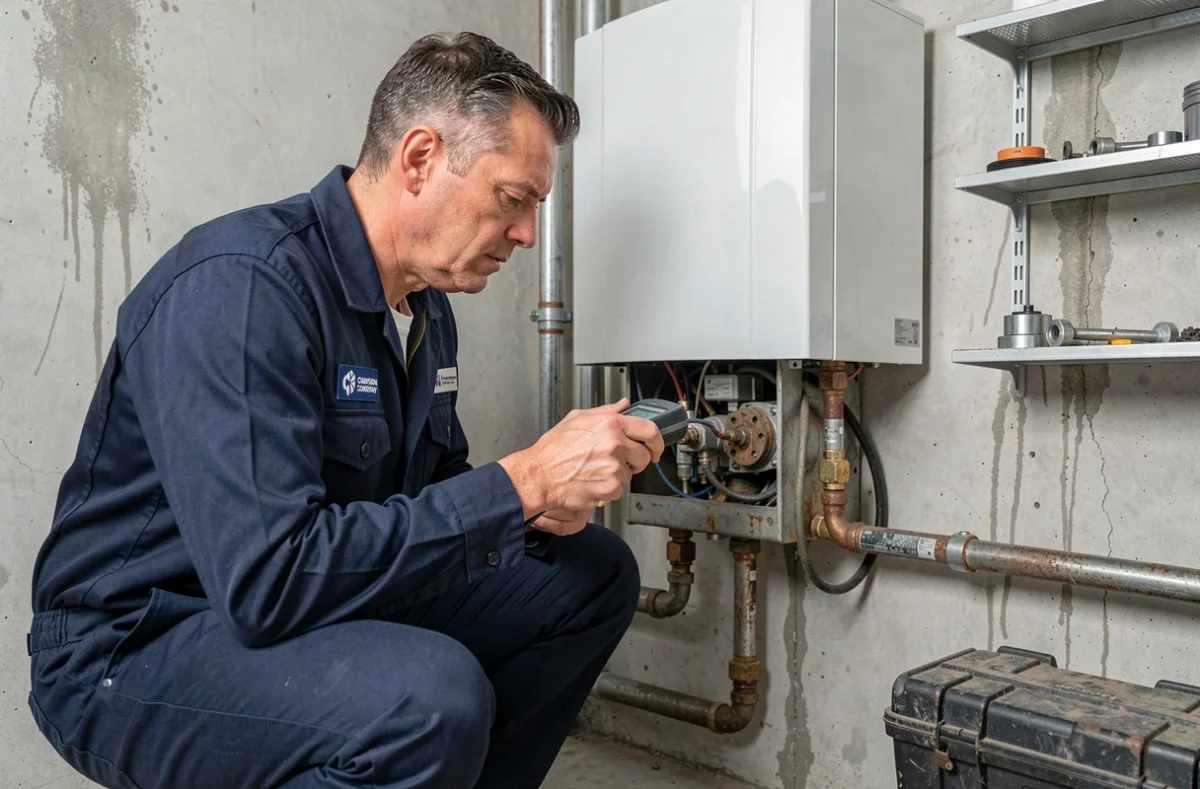
A boiler breaking down on a Sunday evening, a radiator leaking in the middle of January: you never choose the moment. The challenge is not finding a heating technician, but finding a reliable one before the situation worsens. Identifying the right professional to repair your heating system requires checking a few specific points, often overlooked in a hurry.
Check RGE qualification before signing a heating quote
It is often thought that the RGE (Recognized Guarantor of the Environment) label is enough to guarantee the competence of a heating technician. In reality, the RGE must correspond precisely to the equipment in question: QualiPAC for a heat pump, Qualibois for a wood appliance, QualiGaz for a gas boiler.
A QualiPAC certified technician is not necessarily qualified to work on a condensing boiler. Before any intervention, ask for the certification number and verify its validity on the official website of the organization. The RGE is a prerequisite for accessing MaPrimeRénov’ and CEE grants, but it does not replace a check of the professional’s actual specialty.
If you are looking to locate a heating appliance on Développements, filtering by type of qualification helps avoid this common pitfall.
Quote required before repair: what the technician must provide
The classic scene: a repairman arrives, diagnoses the problem, replaces a part, and presents a hefty bill. You haven’t signed anything, validated anything, and you find yourself paying without recourse. A written quote is mandatory before any intervention, regardless of the amount.
This quote must detail three distinct items:
- The cost of labor, with the hourly rate or flat fee applicable to the repair
- The price of spare parts, including references when possible
- Travel expenses, often charged additionally in densely populated urban areas
Once the intervention is complete, a detailed invoice covering these elements must be provided to you. This is not just an administrative formality: it is the only document that protects you in case of a dispute or a defect discovered later.

Annual boiler maintenance: maintenance contract or one-off visit
Many homeowners think that an annual maintenance contract is the only way to meet their boiler maintenance obligation. Feedback on this point varies, but a one-off visit by a qualified professional is sufficient for a boiler ranging from 4 to 400 kW. The subscription with included troubleshooting is a commercial option, not a regulatory requirement.
Differentiating between the two can save money in the long run. A maintenance contract makes sense when the installation is old or complex (collective heating, extensive hydraulic circuit). For a recent individual boiler, an annual one-off visit covers the legal obligation without commitment.
Maintenance certificate: a document to keep
At the end of the visit, the heating technician provides a maintenance certificate. This document may be required by your insurer in the event of a heating-related claim. Keep it for at least two years, ideally longer if you are a tenant (the landlord may request it).
Emergency heating repair: spotting scam signals
Heating repair scams follow a predictable pattern. An unidentifiable technician, a price quoted over the phone without a quote, immediate intervention without giving time to think. A serious professional always agrees to provide a quote before starting, even in urgent situations.
Some concrete reflexes protect against unpleasant surprises:
- Check that the company has a valid SIRET number and a current ten-year insurance policy
- Systematically refuse cash payments without an invoice, even for a small amount
- Ask for a professional card or proof of identity before allowing the technician to enter
- Compare at least two quotes when the situation allows, even for a simple repair
The pressure of urgency pushes you to accept the first available technician. Cutting off the gas or water supply and waiting a few hours is often preferable to a rushed repair that will cost more to fix later.
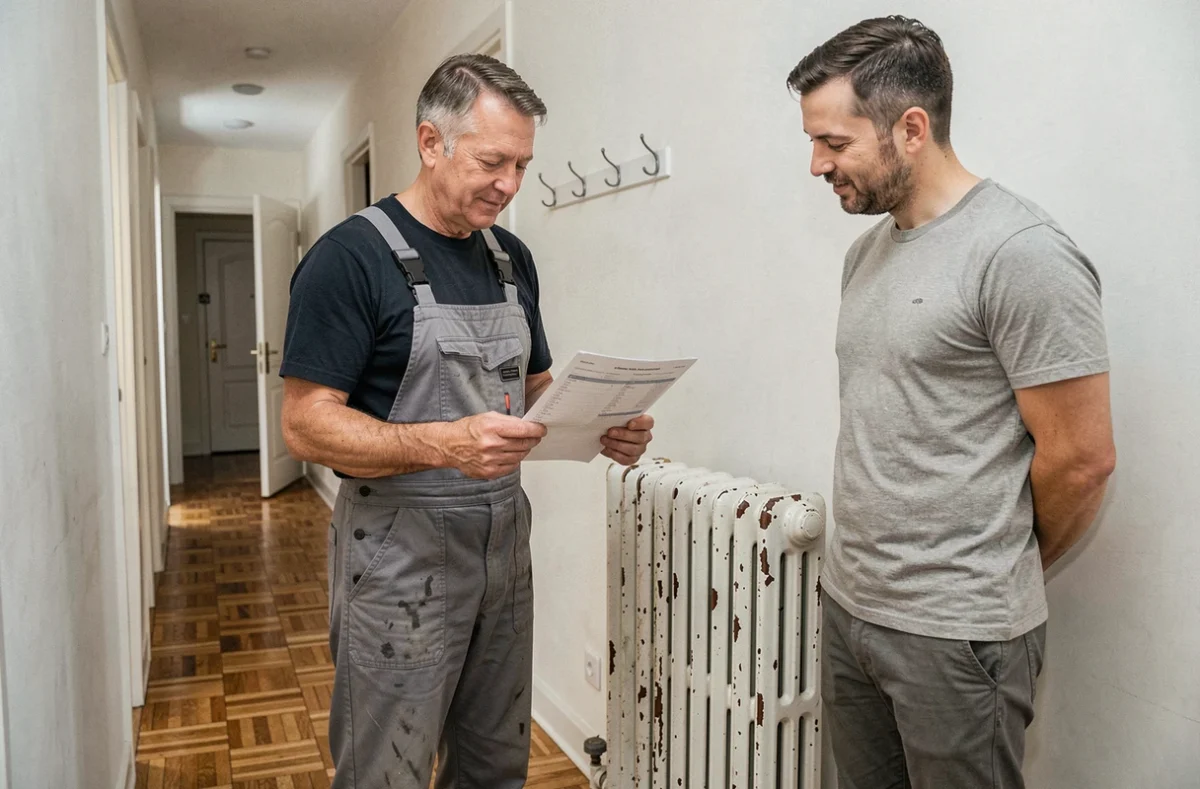
Choosing a local heating technician: the criteria that really matter
Online directories multiply profiles, reviews, and badges. It can be confusing. Three elements are sufficient for effective filtering.
First, the actual geographical proximity. A technician located less than thirty minutes from your home can respond quickly, and their travel costs will remain manageable. National platforms sometimes redirect to distant professionals, which lengthens response times and increases costs.
Next, specialization. A heating technician who works daily on your type of installation (gas, oil, heat pump, wood) will be more effective than a generalist who works on everything. Ask the question directly: what type of equipment do you work on most often?
Finally, customer reviews remain useful as long as you read negative reviews first. A professional with a few mixed reviews but reasoned responses inspires more confidence than a profile showing only perfect ratings without comments.
Word of mouth remains the most reliable channel for heating repairs. A neighbor, a building caretaker, or a property manager who recommends a technician after a real intervention provides information that digital platforms cannot verify. Always keep the contact details of a tested and approved heating technician: when the breakdown occurs, you don’t have the luxury of searching.