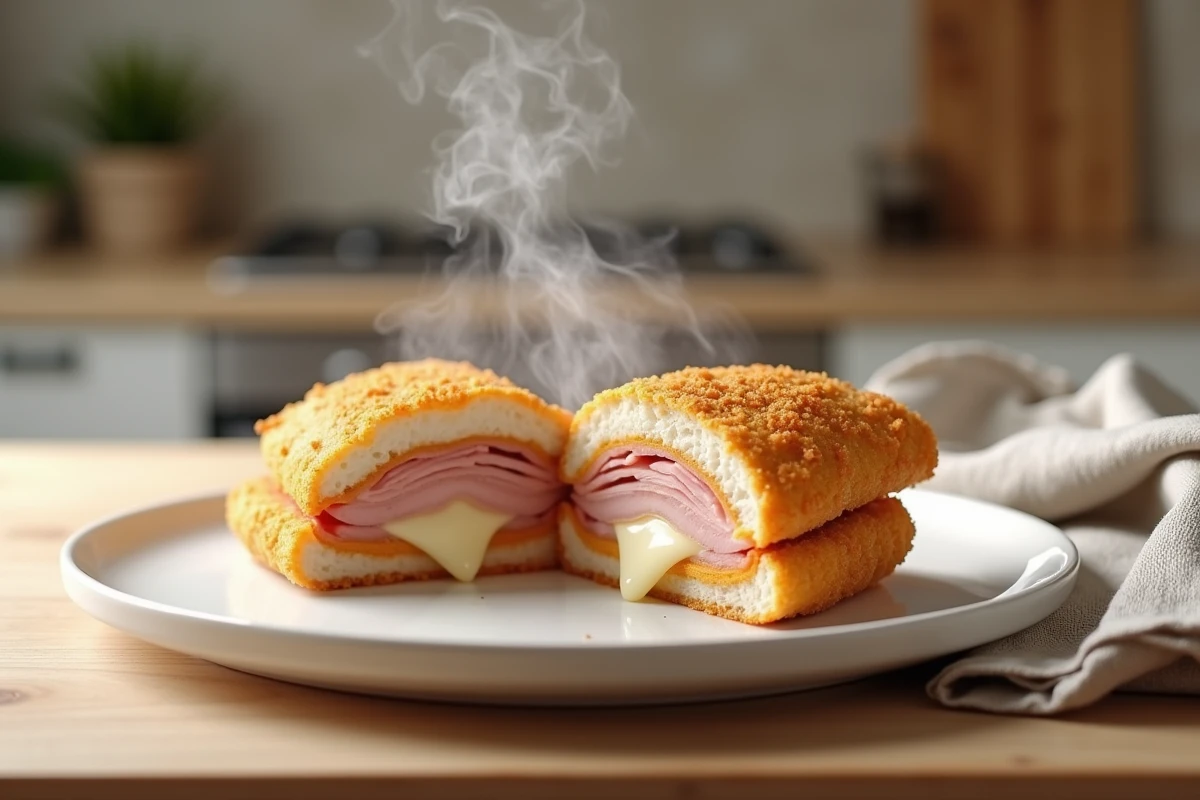
A microwaved cordon bleu is often a disappointment: soft coating, cheese barely melted on one side and burning on the other. The problem does not come from the microwave itself, but from how it is used. Microwaving a cordon bleu requires a precise approach, where power, pauses, and core temperature control make all the difference between an acceptable dish and a poorly managed health risk.
Why the microwave heats a cordon bleu unevenly
Have you ever noticed that a cordon bleu can be boiling on the edges and lukewarm in the center? This phenomenon has a simple explanation. Domestic microwaves heat very unevenly, especially on thick or stuffed products.
A cordon bleu combines several layers: meat, ham, cheese, and then coating. Each material absorbs the waves differently. Cheese, rich in water and fat, heats quickly. The denser meat warms up more slowly. The outer breadcrumb absorbs little energy and softens due to the escaping steam.
This imbalance explains why simple timing is not enough. Two cordon bleus from different brands, with different thicknesses or fillings, will not react the same way. Adjusting the power and incorporating resting phases helps to compensate for these discrepancies, a point that most packaging does not detail.
To better understand the cooking time of a cordon bleu in the microwave, one must think in terms of thermal diffusion rather than a fixed timer.
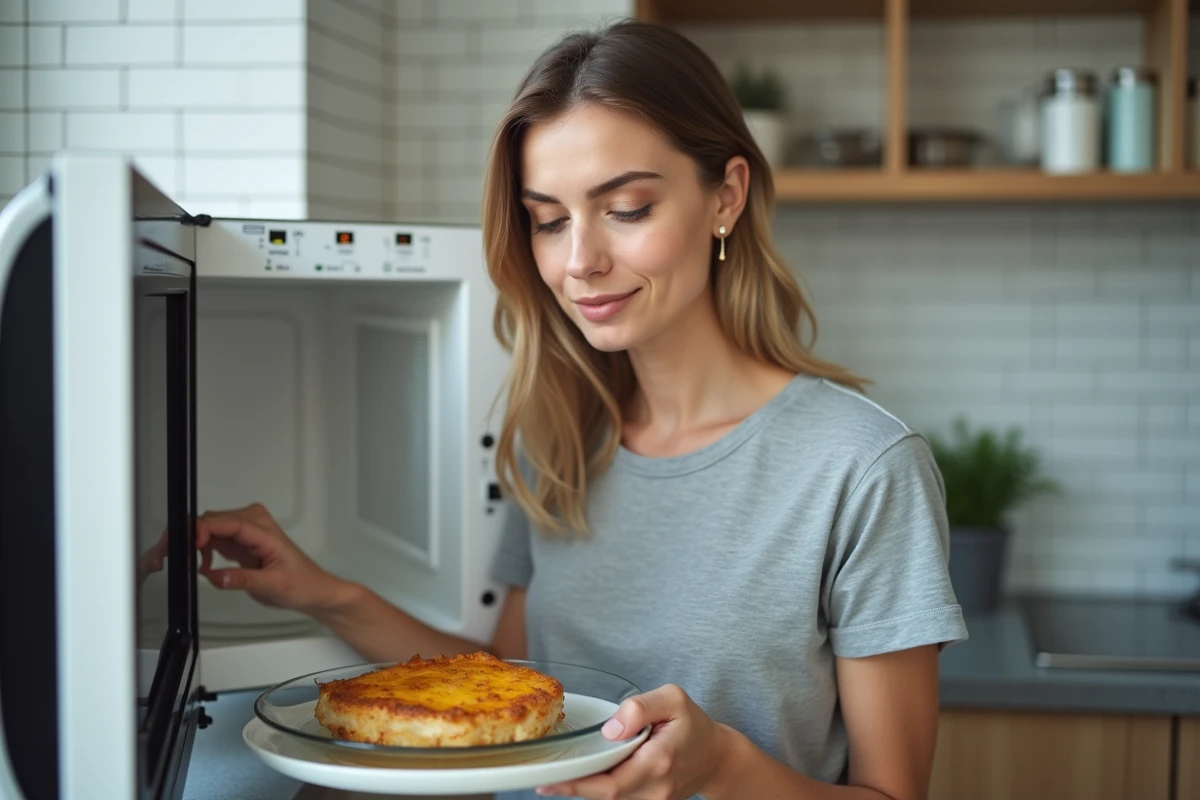
Cordon bleu in the microwave: reaching 74 °C in the center without drying out
The temperature of 74 °C in the center is the food safety benchmark for breaded poultry products. Below this, the risk of salmonellosis persists, even if the cordon bleu appears cooked on the surface. This threshold is rarely mentioned in mainstream recipes, which merely provide an indicative time.
Alternating heating and resting for even cooking
The most reliable method is based on one principle: alternating heating time and resting time. During the pause, the heat accumulated on the periphery migrates towards the center of the cordon bleu. Without this diffusion, the center remains cold while the edges overheat.
Specifically, here’s an approach that works:
- Place the cordon bleu on a plate, without covering it tightly (a paper towel placed on top absorbs excess moisture and protects the coating)
- Heat at medium power rather than full power, to allow time for the heat to penetrate without drying out the meat
- After each heating phase, let it rest for one to two minutes with the door closed before restarting, which allows the temperature to balance
- Flip the cordon bleu halfway through cooking to limit cold spots, especially if your appliance’s turntable is absent or irregular
Resting is an integral part of cooking, not an optional step. It is during these pauses that the center of the cordon bleu catches up to the temperature of the edges.
Adjusting power according to your device
A microwave set to its maximum power projects a lot of energy in a short time. For a thin and uniform product, this may be suitable. For a stuffed cordon bleu, it is the best way to get cheese that explodes while the meat remains insufficiently warm in the center.
Reducing the power to about 60-70% of the maximum slightly extends the total time, but the result is significantly more consistent. The meat has time to heat without the coating becoming rubbery.
Microwave breadcrumb texture: limiting damage
Let’s be direct: the microwave will never make a coating crispy like an oven or a pan. The reason is physical. Crispiness arises from the Maillard reaction, which requires dry, direct heat. The microwave produces steam, the enemy of crunchiness.
Some adjustments can still achieve a decent texture rather than a completely soft one:
- Place the cordon bleu on paper towels, which absorb the moisture released during cooking and prevent the base from soaking
- Do not cover with a tight plastic wrap: trapped steam further softens the coating. A simple paper towel placed on top is sufficient
- If you have a microwave with grill or combined function, use this option for the last seconds of cooking. The dry heat from the grill gives a bit of structure back to the coating
For those who want to go further, a quick pass in a pan after microwaving (a few seconds on each side in a hot oil) restores crispiness. The microwave takes care of cooking the center, and the pan handles the outer texture.
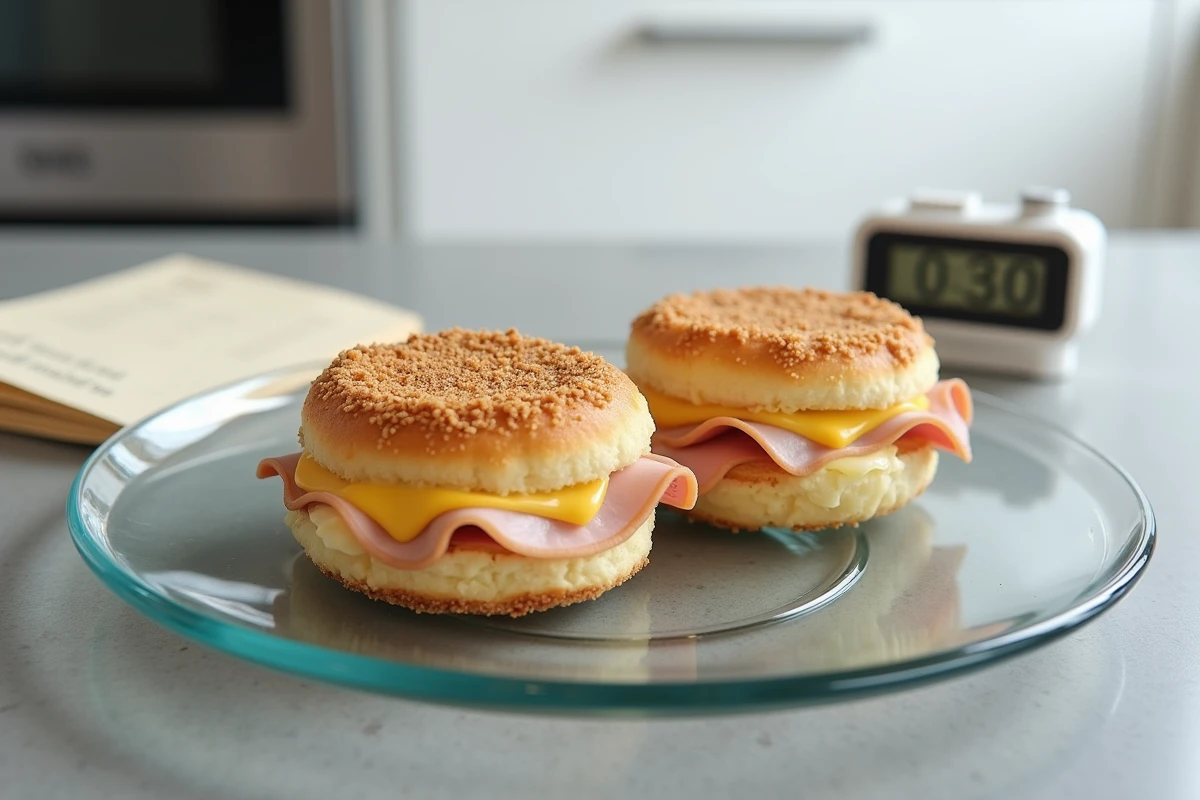
Reheating a pre-cooked cordon bleu: traps to avoid
Reheating poses a different problem than the initial cooking. A pre-cooked cordon bleu has lost some of its moisture. Microwaving it at full power will dry out the meat even more and turn the coating into a sole.
To reheat, the power should be even lower than for the first cooking. Aim for half the maximum power of your device, with short intervals. The goal is to bring the product to temperature without extending exposure to the waves.
A safety point to keep in mind: even when reheating, the core temperature must rise sufficiently. A cordon bleu taken from the refrigerator and reheated too quickly may seem hot on the surface while remaining below the safety threshold in the center. The alternating heating-resting method remains valid here as well.
The paper towel remains useful during reheating. It absorbs the excess moisture that accumulates under the cordon bleu and preserves what remains of the coating’s structure.
The microwave is a quick cooking tool, not a passive cooking tool. Every resting phase counts as much as every heating phase. By adjusting the power and ensuring that the heat has reached the core of the product, a microwaved cordon bleu can become a quick and safe meal, even if it will never rival oven cooking in terms of crispiness.