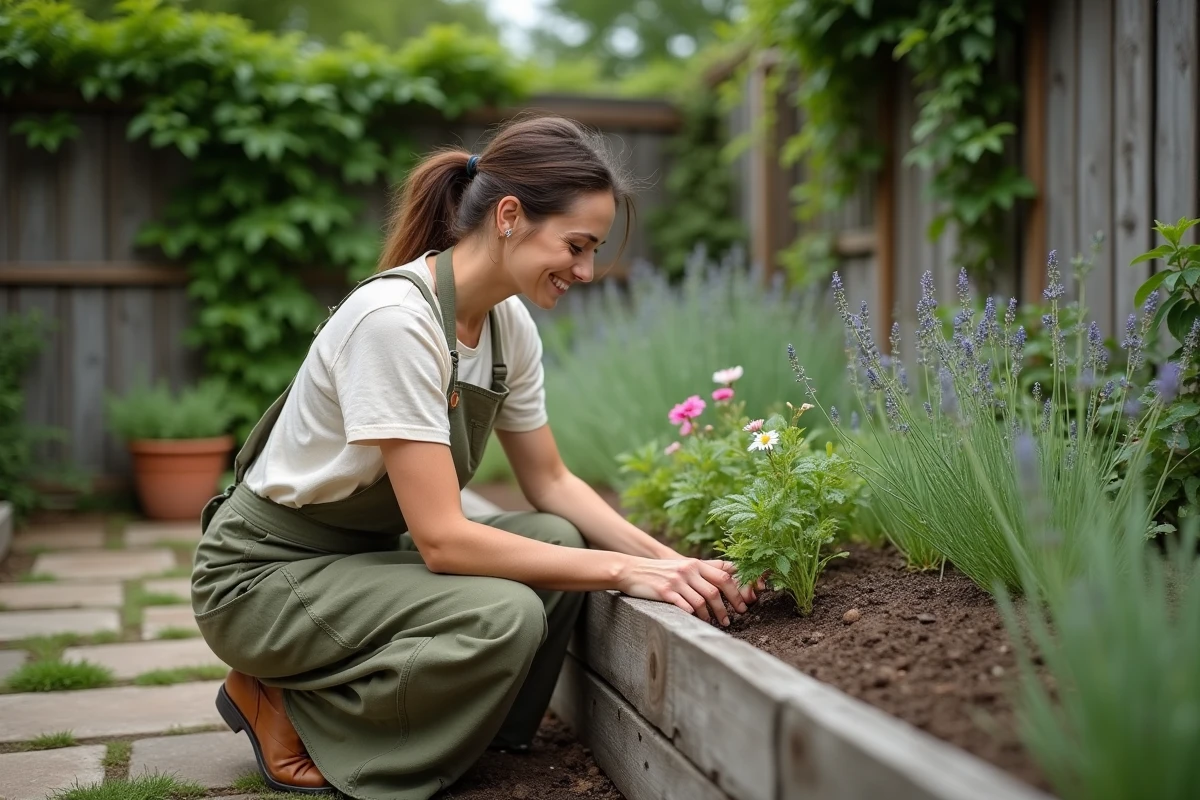
A natural garden is not just about letting the grass grow without intervention. It relies on precise design choices, an understanding of the soil, and an ecosystem logic that requires thought before planting. Creating a thriving garden at home means accepting to work with living organisms rather than against them, which profoundly changes the way one arranges their outdoor space.
Living soils and plant cover: the foundation of a sustainable natural garden
Before choosing any plant, the soil deserves full attention. Bare, compacted, or mechanically turned soil every year loses its structure and microbial life. Successful natural gardens start from a simple principle: never leave the soil bare.
Organic mulching (dead leaves, wood chips, straw) protects the earth from drying out and nourishes soil organisms as it decomposes. This permanent cover promotes earthworms and mycorrhizal fungi, which enhance plants’ ability to absorb water and nutrients.
Several techniques allow for further advancement. Sowing green manures (clover, phacelia, mustard) between crops or in unplanted areas structures the soil deeply through their roots. Combined with mulching, this approach mimics the functioning of a woodland floor, where no one comes to turn the soil. Additional resources are available on the gardening section of L’Esprit Nature to delve deeper into these methods.
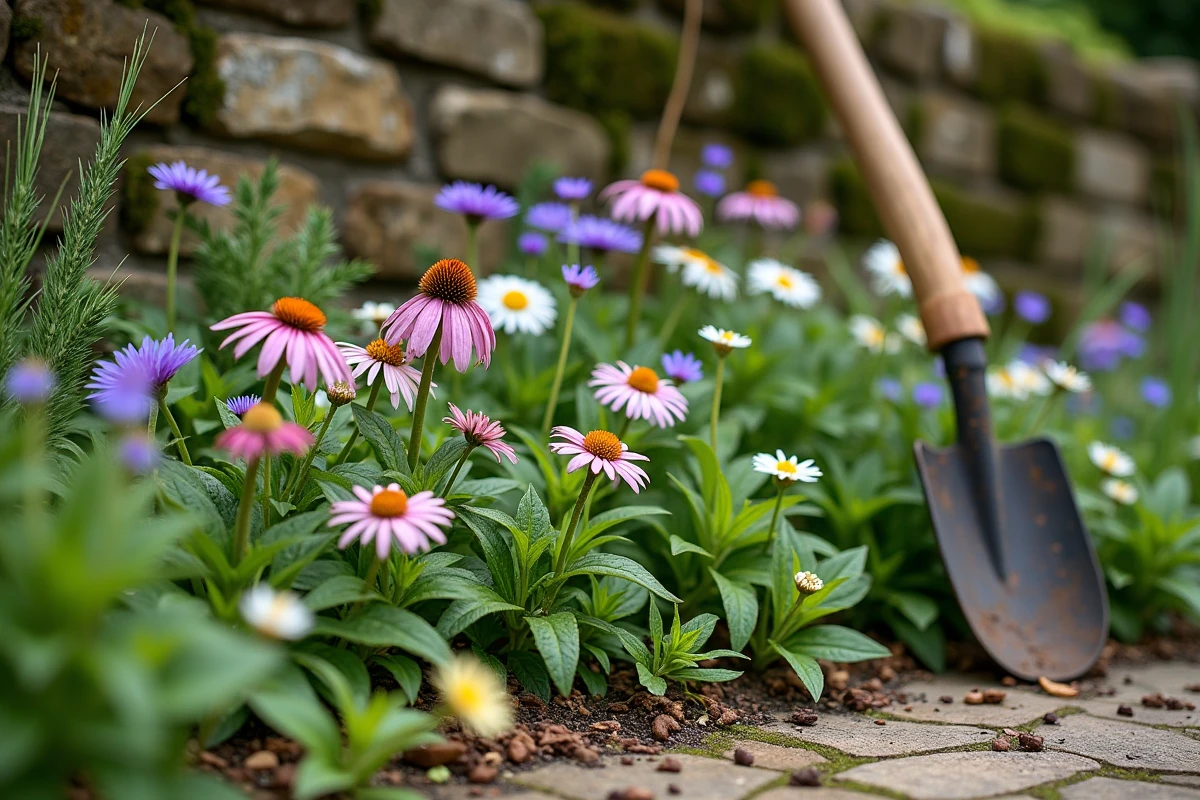
Water management in the garden: swales, rainwater harvesting, and mindful watering
Natural water management has become a central issue in the design of ecological gardens. Three complementary approaches deserve to be combined according to the configuration of your land.
Rainwater harvesting and gravity irrigation
Installing a rainwater collection tank connected to the house’s gutters remains the most cost-effective action. Coupled with a drip or gravity irrigation system, this installation significantly reduces dependence on the water supply. Watering at the base of plants early in the morning limits evaporation.
Swales and infiltration zones
Creating landscape swales slows down runoff and recharges the groundwater. These slight depressions dug in the garden, planted with grasses or wetland plants, capture water during heavy rains and slowly return it to the soil. On sloped land, they transform an erosion problem into a resource.
Field reports vary on the ideal depth of swales for a particular garden, but a depression of a few tens of centimeters is sufficient in most cases for a significant effect.
Vegetated structures and climate adaptation of the garden
In recent years, bioclimatic pergolas and lightweight vegetated structures have become more than just decorative elements. They play a concrete role in regulating the thermal environment of the garden and terrace, creating natural shade and reducing summer overheating on facades.
Climbing plants that attract pollinators transform a pergola into an ecological corridor. Honeysuckle, clematis, vines, or akebia provide dense cover in summer while nourishing pollinators. In winter, their deciduous foliage allows light to pass through, a natural bioclimatic function.
This choice of design goes beyond aesthetic considerations. It is about concretely adapting the garden to climate change, reducing direct sun exposure in outdoor living areas, and limiting the heat-reflecting effect of stone or wooden terraces.
Labels and financial aid for an ecological garden in France
An aspect rarely addressed by gardening guides: several French regions and metropolitan areas offer financial aid for gardens managed ecologically. These initiatives concern the de-paving of soils, greening, and creating spaces favorable to biodiversity.
Three types of initiatives coexist:
- Associative labels like “LPO Refuge,” “Nature Oasis,” or “Noah’s Garden,” which provide a framework for good practices and recognition for zero-pesticide gardens with living hedges, ponds, or flowering meadows
- Municipal or metropolitan grants for greening, often linked to the removal of impervious surfaces (concrete slabs, asphalt) in favor of open soil
- Technical support offered by certain local authorities, in the form of personalized advice or free provision of local plants and compost
Eligibility conditions vary from one community to another. Inquiring with your town hall or metropolitan area before launching a landscaping project can sometimes fund a significant part of the work.
Choosing plants for a natural garden: favor local species
A thriving natural garden relies on plants adapted to the local climate and soil. Local species, or at least those that have been acclimatized to the region for a long time, require less watering, fewer treatments, and are more resistant to diseases than exotic varieties.
Mixing plant layers replicates the structure of a forest ecosystem. Tall trees, shrubs, ground-cover perennials, climbers: each layer occupies a space and a function. Ground-cover perennials limit the growth of weeds without resorting to chemical weeding. Berry-producing shrubs feed birds in autumn and winter.
For flowers, mixtures of flowering meadows composed of local nectar-rich species (yarrow, centaury, meadow sage, mallow) require only one annual mowing and attract a much greater diversity of pollinators than a traditional flower bed.
- Check the exposure (sun, partial shade, shade) of each area before planting
- Group plants by water needs to streamline watering
- Incorporate at least one tree or large shrub for each significant area of space to structure the height of the space
A natural garden produces its own fertility and regulates its pests as long as the plant diversity is sufficient. Composite hedges, dead wood piles, and areas of voluntary fallow welcome beneficial organisms (hedgehogs, lacewings, ladybugs) that keep aphid and slug populations at an acceptable level. The garden ultimately requires less time than a conventional garden, not more.