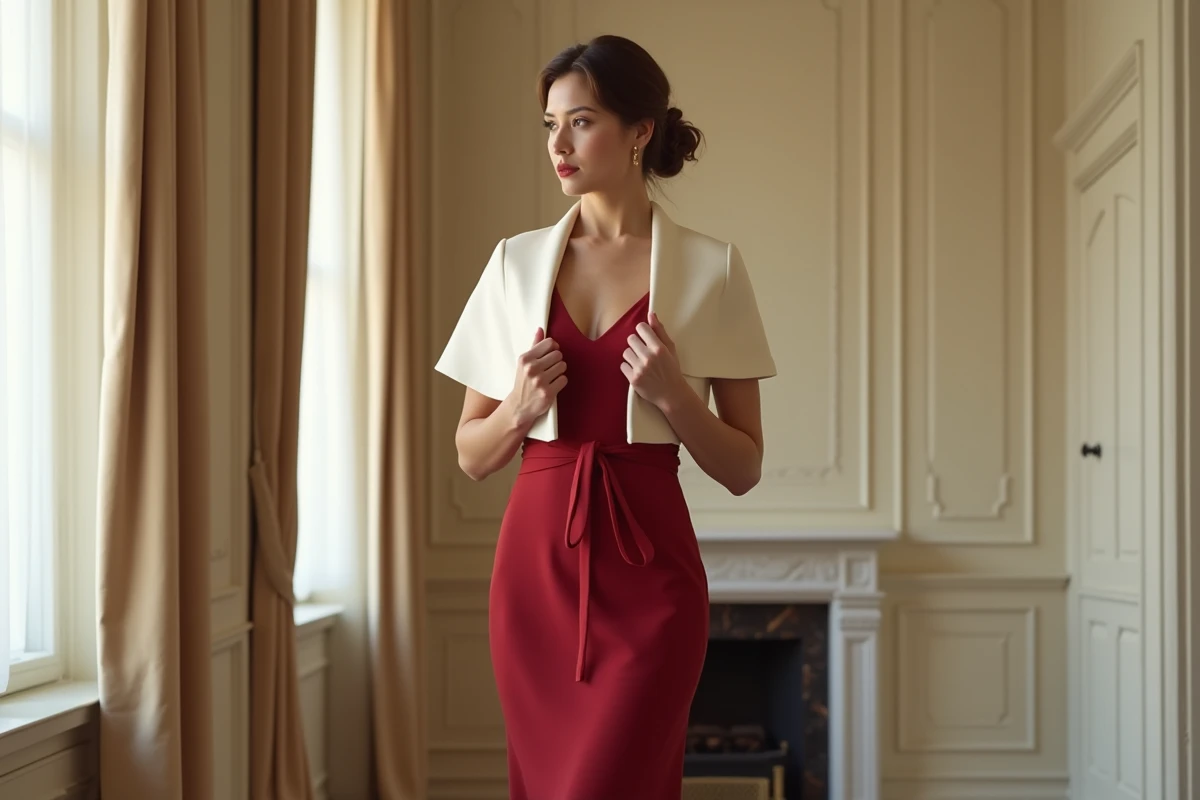
A red dress draws attention more than any other element of the outfit. Adding a shawl over the shoulders can either amplify this presence or muddle it. The choice of this piece relies on specific criteria of material, dimensions, and color, which usual guides rarely address together.
Shawl, wrap, scarf: different formats for different dresses
The term “shawl” is often used as a catch-all for any fabric worn over the shoulders. La Fabrique de l’Écharpe clarified these distinctions in 2024: a shawl measures about 70 to 90 cm wide and 180 to 190 cm long, made from luxurious materials like cashmere, yak, or silk. A scarf is smaller and lighter, while a wrap is thicker and less suitable for a formal outfit.
This difference in format has a direct impact on the look with a red dress. A plunging neckline dress requires a shawl wide enough to cover the shoulders without slipping. A fitted dress with short sleeves can tolerate a narrower format, similar to a classic pashmina. If the skirt has volume, a shawl that is too short creates a visual imbalance between the top and bottom of the silhouette.
Before asking which red shawl to choose, one must first measure the piece and compare it to the cut of the dress. An online purchase without these checks often leads to an accessory that falls poorly or does not stay in place.
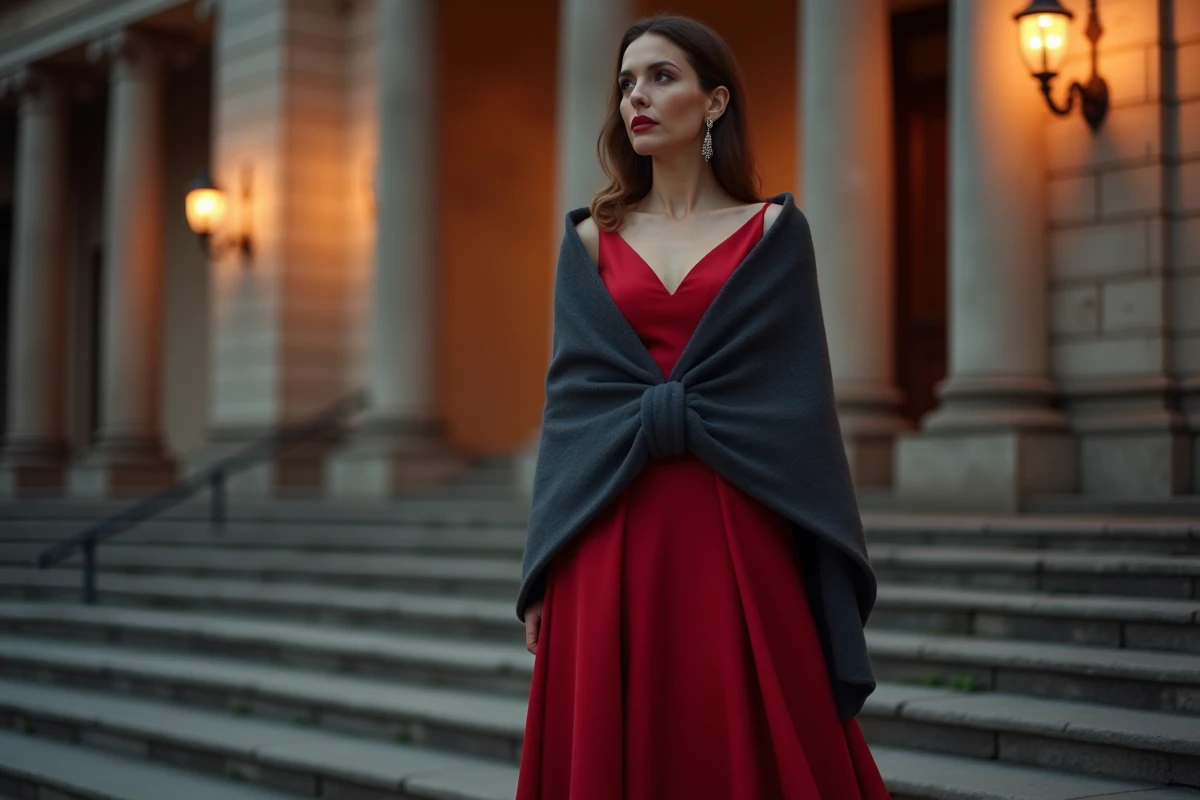
Shawl color on a red dress: beyond black and nude
The most common associations (black shawl, nude shawl, white shawl) work, but they remain default reflexes. Recent seasonal palettes open up other avenues that usual content does not explore.
Gradient of red and pink tones
Pairing a shawl in a gradient of red or pink softens the outfit without creating a visual break. A deep burgundy on a bright red adds depth. A powder pink creates a soft contrast, more photographic than a stark black. This tone-on-tone play avoids the overly sharp look that can seem severe in photos, especially at a wedding or an evening event.
Cool colors as a counterpoint
Petrol blue or lilac work as chromatic counterpoints to red. These associations are documented in complementary color palettes and remain underused in formal outfits. The result is more unexpected than a classic black, and the cool-warm contrast adds dimension to the whole without overwhelming the outfit.
What the season changes
For a summer event, lightweight silk shawls in light tones (ivory, champagne, pale pink) allow the silhouette to breathe. In autumn or winter, a cashmere pashmina in a dark color (navy, anthracite, plum) adds substance and warmth. The criterion is not only aesthetic: a fine silk shawl in five degrees will be useless, and a thick cashmere in the middle of summer will become an accessory that is removed after ten minutes.
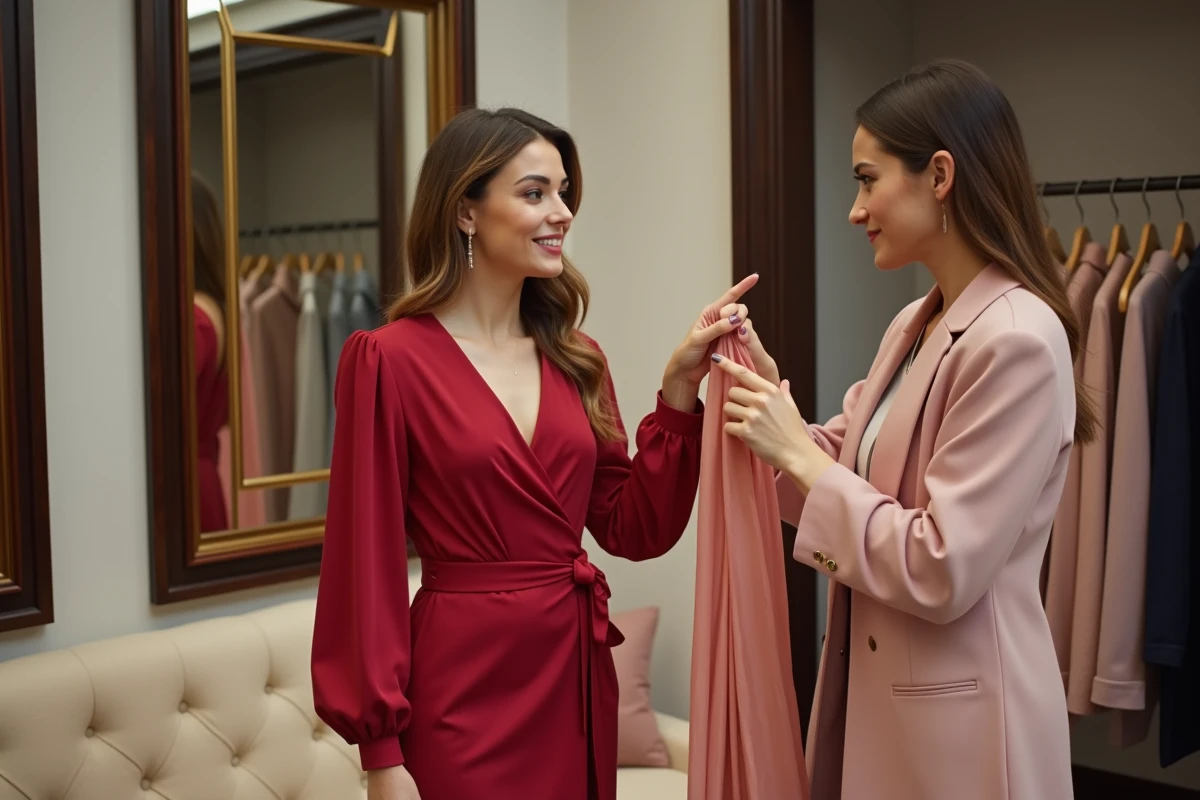
Material and drape: what distinguishes a shawl that stays from one that slips
The most concrete problem with a shawl over an evening dress is that it does not stay in place. This flaw is linked to the combination of two factors: the material of the shawl and that of the dress.
- A satin shawl over a satin dress will always slip. Pairing two smooth surfaces creates a sliding effect that only a brooch or pin can compensate for.
- A cashmere or fine wool shawl grips better on a fluid fabric like crepe or jersey. The slight friction between natural fibers ensures minimal hold.
- Wild silk, with its irregular grain, offers better hold than smooth silk while maintaining the shine suitable for a formal outfit.
- The weight of the shawl also matters: a weight that is too light gives a vaporous look that can disrupt the line of the dress, while a fabric that is too dense weighs down the shoulders.
This technical parameter almost never appears in accessory guides, which focus on color. In practice, a shawl of the right color that slips every two minutes becomes a nuisance rather than an asset.
Shawl and wedding dress code: a choice that goes beyond aesthetics
Wearing a red dress to a wedding remains a noticeable choice. The shawl then plays an additional role: it can adhere to modesty codes related to the ceremony location (church, synagogue, mosque) or simply soften the impact of a bright color in a context where sobriety is expected.
A shawl covering the shoulders and upper arms is generally sufficient to comply with religious dress codes. The standard format of about 70 cm wide fulfills this function. A narrow scarf will not cover enough, and a very wide wrap risks giving an overly enveloping effect that obscures the dress.
For a civil ceremony or an evening without dress constraints, the shawl becomes a purely stylistic choice. It can be worn draped over one arm, tied at the side, or simply placed over the shoulders. The way it is worn changes the look as much as the color or material, and deserves to be tested in front of a mirror before the big day.
The choice of a shawl to accompany a red dress relies on a series of interconnected decisions: the format suited to the cut of the dress, the material compatible with the fabric to avoid slipping, the color chosen based on the context and season, and finally the way it is worn. Addressing only one of these criteria without the others leads to an accessory that does not fulfill its role.