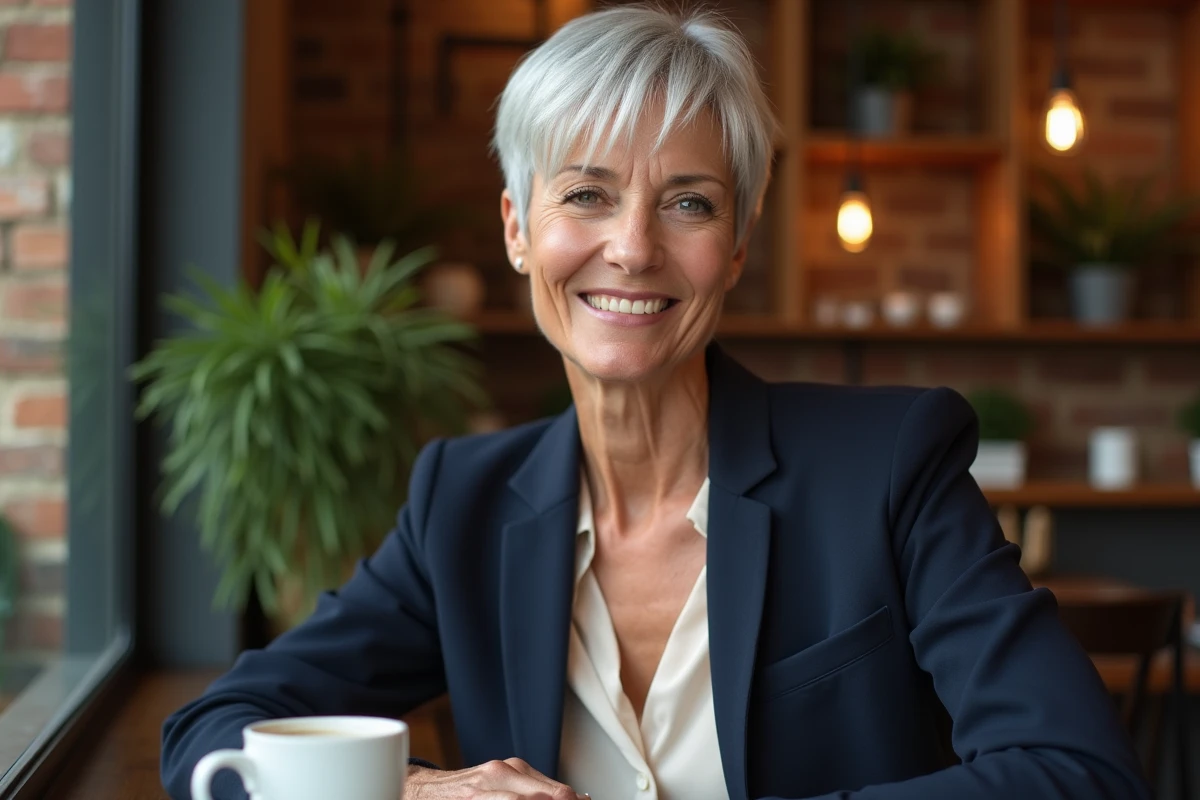
When accompanying a 60-year-old client with fine hair to the shampoo basin, the first thing that often strikes is the loss of density at the temples and crown. Before discussing trends or styles, we examine the hair texture. The cuts that work on this type of hair all share a common point: they create an illusion of volume without relying on a daily twenty-minute blow-dry.
Scalp diagnosis before the cut: a reflex still too rare
Most articles on hairstyles for over 60s start with a catalog of cuts. In salons, the approach has changed. More and more hairdressers are incorporating a density and hair loss assessment before suggesting anything. This protocol, notably found in salons affiliated with L’Oréal Professionnel, allows for an evaluation of the actual state of the scalp, areas of thinning, and hair fineness.
This results in a precise mapping that guides the choice. A short layered cut on an already sparse area does not yield the same result as on a still dense area. The diagnosis guides the cut, not the other way around. Ignoring this step is like choosing a pair of glasses without knowing your prescription.
To explore options for hairstyles for women over 60 with fine hair according to Beauty Boo, this preliminary assessment remains the foundation on which to build a suitable style.
Textured short cuts for fine hair: what creates volume without heat
On fine hair after 60, texture replaces volume obtained through heat. Heating tools (straighteners, blow-dry brushes) weaken the already thin hair fiber. Hairdressers interviewed by aufeminin and Dessange recommend low-temperature blow-drying routines combined with lightweight thermo-protective products.
Specifically, three cuts stand out for their ability to add body without resorting to aggressive styling.
The tapered pixie on top
Length is kept on the top of the head to create movement, while the sides remain short and neat. The layering on the crown gives the impression of thicker hair. The tapered pixie retains its shape for several weeks without touch-ups, provided the nape is refreshed every four to five weeks.
The slightly layered short bob
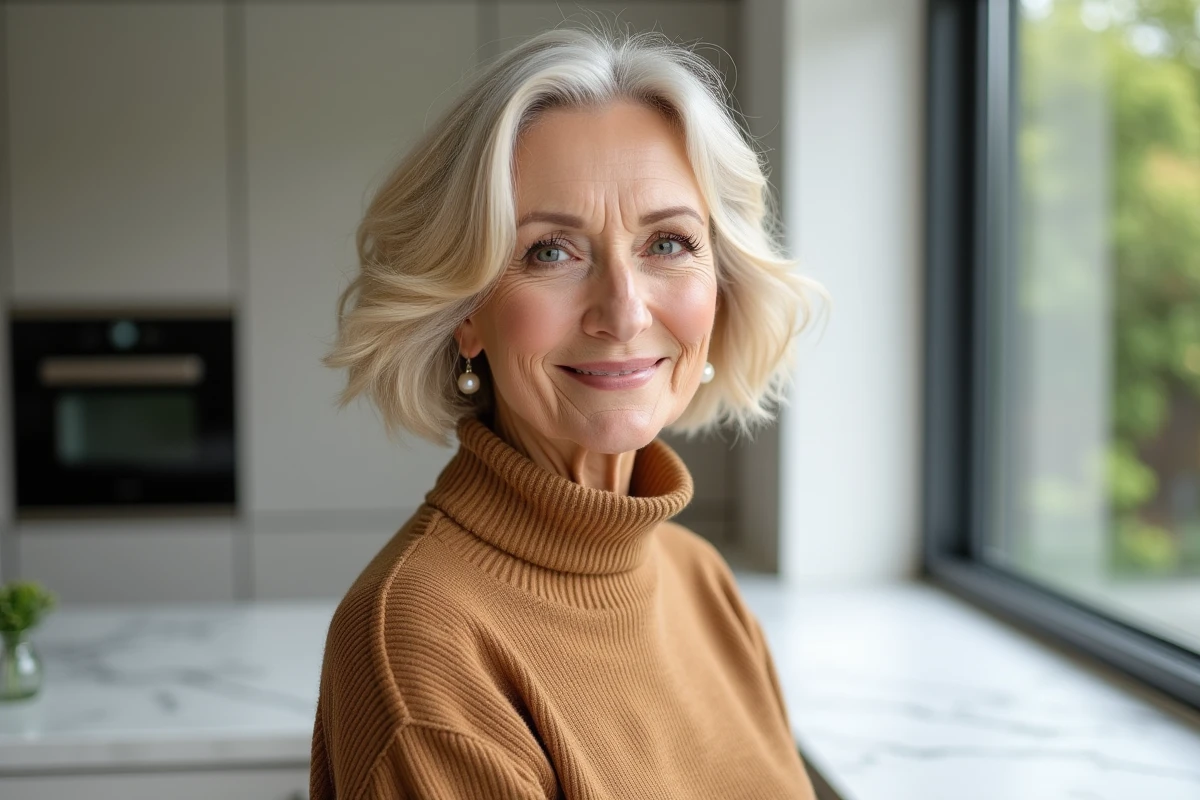
Cut just below the jawline, it frames the face and adds structure. The layering remains light: too many layers on fine hair end up flattening the whole look. We aim for two to three levels of length, no more.
The short textured cut with movement on top
Less geometric than the bob, it plays on irregular strands that move naturally. A lightweight texturizing spray is enough to wake up the volume in the morning. Opinions vary on this point, but most hairdressers agree that air-drying is preferable to blow-drying for this cut.
Fringe curtain and face framing: the cut designed for video conferencing
Since the rise of remote work, salon requests have evolved. Women over 60 with fine hair are asking for more cuts designed for face framing on camera. In video conferencing, only the perimeter of the face is visible. Targeted volume on the sides and a light curtain fringe radically change the impression on screen.
The curtain fringe, open in the center and longer at the temples, softens the features without flattening the forehead. On fine hair, it is cut with dry cutting (scissors on dry hair) to avoid a heavy effect once the hair is washed and dried.
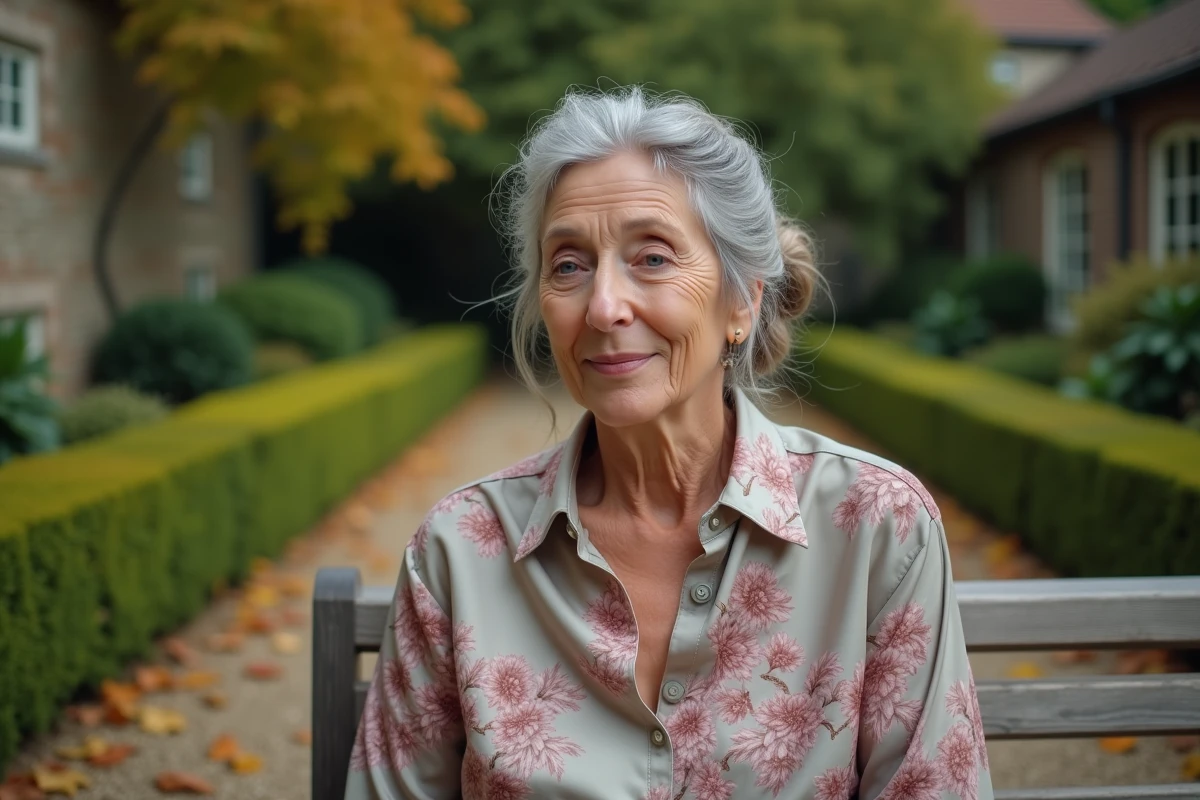
This approach works equally well on a short bob or a mid-length cut grazing the collarbones. The idea is to focus the work on the visible area in video calls, rather than on the back view that no one sees from a distance.
Color and highlights on fine hair after 60: what visually densifies
Color plays a direct role in the perception of density. A uniform white hair often appears sparser than hair treated with shades. We are not talking about full coverage coloring, but targeted techniques.
- Ton-on-ton balayage deposits highlights close to the base color (ash blonde on white, silver gray on salt and pepper), creating variations in depth and an illusion of mass
- Babylights, ultra-fine strands, mimic the natural sun highlights and add dimension without weighing down the fiber
- Transparent hair gloss adds shine without pigment, which is sometimes enough to restore visual body to dull hair
On fine hair, heavy bleaching that breaks the fiber is avoided. A good colorist adjusts the processing times and peroxide volumes to preserve the hair’s elasticity.
Daily styling routine suitable for fine and fragile hair
Style only holds if the routine follows. A few technical adjustments are enough to prolong the hold of a cut without damaging the texture.
- Replace the high-power hairdryer with a warm or air-drying method, especially on textured cuts
- Use a sulfate-free volumizing shampoo that doesn’t weigh the hair down at the roots
- Apply treatments (mask, conditioner) only on the lengths, never on the roots, to avoid weighing down the area where volume is lacking
- Favor a lightweight sea salt spray or a texturizing powder at the roots to lift the fiber in the morning
Regarding cutting frequency, a salon visit every five to six weeks maintains the shape on a pixie or short bob. For a mid-length cut with a curtain fringe, it can be extended to seven or eight weeks by only touching up the fringe between appointments.
A well-cut and properly maintained fine hair gives an impression of density that volume alone cannot compensate for. The cut remains the main lever, color amplifies the effect, and the daily routine preserves the result over time.