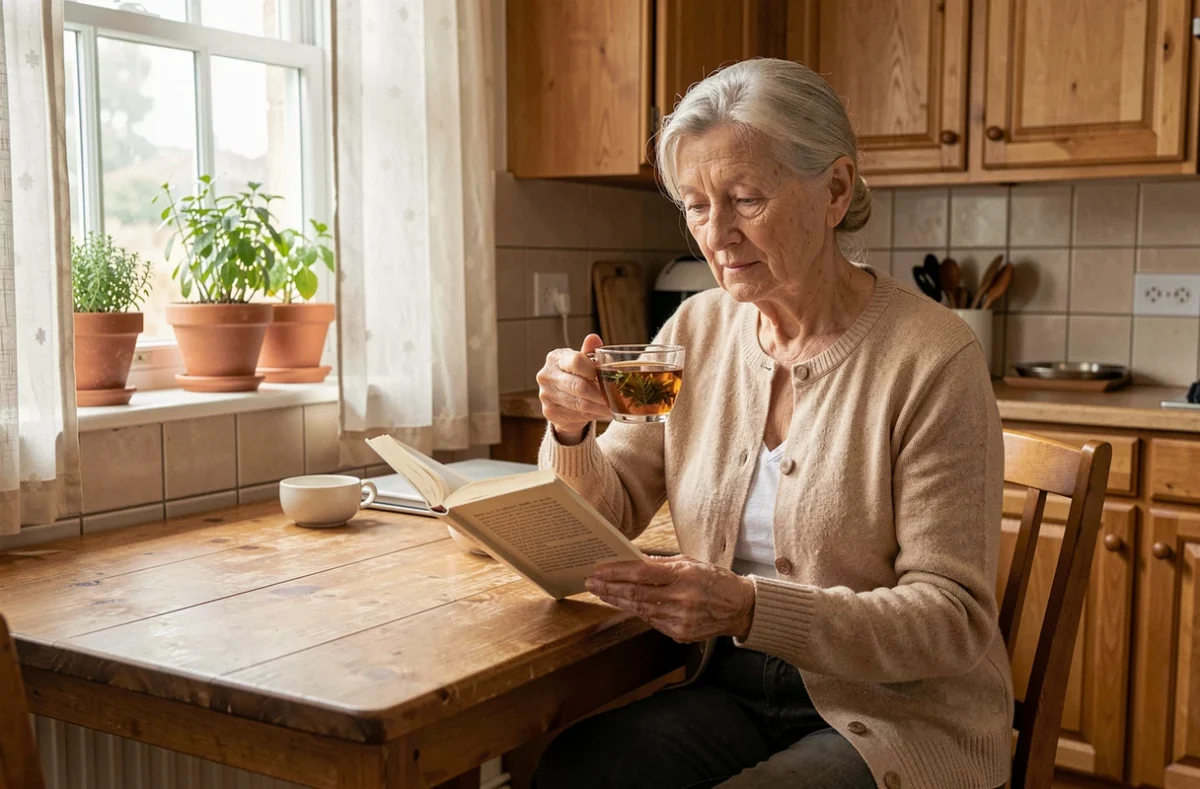
A grab bar that has come loose in the bathroom, a rug that slips in the hallway, stairs that have become too steep after knee surgery: it often takes one specific household accident to prompt people to think about staying at home as they age. Aging well at home is about more than simply adding equipment. It means coordinating care providers, adapting the home room by room and, sometimes, accepting that home is no longer enough.
Adapting your home to support aging in place: key considerations
Grab bars and walk-in showers are usually the first things that come to mind. These modifications matter, but they only address part of the problem. The overall layout of the home determines whether an older person can remain there safely.
Most falls happen in the bathroom. Replacing the bathtub with a level-access shower, installing a wall-mounted seat and fitting non-slip flooring can significantly reduce the risk. Daily bathing is still a vulnerable moment: good lighting and plenty of room to move around make it easier for a care worker to help if needed.
A bedroom on the ground floor is the next modification to consider as mobility declines. Climbing the stairs twice a day with a walker is not sustainable in the long term. If the layout of the home makes a ground-floor bedroom impossible, a stairlift can extend independence for a few years, but its cost and maintenance need to be planned for.
One often-overlooked detail is night-time lighting between the bedroom and the bathroom. Motion-activated night lights placed along the floor beside the route can help prevent falls at night, which account for a significant proportion of household accidents among people over 75.
An occupational therapist can assess the home and identify priority modifications. Several organizations provide directories of these professionals and information about available assistance, including https://www.aide-seniors.fr, which outlines the support programs available.
Home care and coordinated health services: creating a coherent care plan
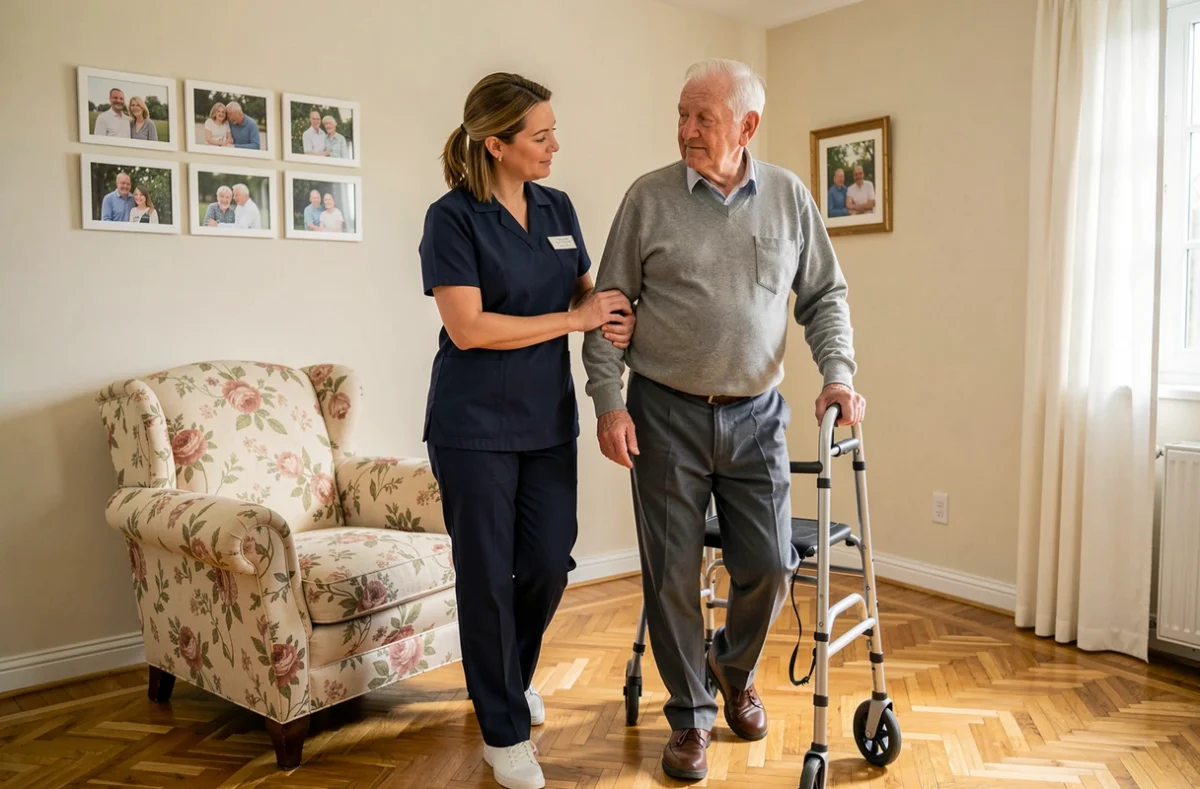
Housekeeping help, meal delivery, a home care aide, the SSIAD (home nursing service), the primary care physician: there are many people involved, and that is precisely where things can get complicated. Without coordination, visits overlap, information gets lost, and the older person is left dealing with a stream of care providers who are not working together.
Distinguishing social support from medical care
Help with daily living (housekeeping, shopping, meal preparation, help with bathing and personal hygiene) is provided by home care services and partly funded through the APA (personalized autonomy allowance). The number of hours of support depends on the level of loss of independence assessed by the département.
Nursing care (dressings, injections, medication monitoring) is provided through the SSIAD or by independent nurses, with a prescription from the doctor. These two areas—social support and medical care—often operate in parallel without any real coordination.
The primary care physician’s central role
The primary care physician is best placed to spot gradual deterioration. Subtle weight loss, the onset of confusion, new difficulty getting up from a chair: these signs can go unnoticed if visits are infrequent. Regular medical follow-up is the foundation of the entire support network.
Coordination can be formalized by contacting a coordination support service (DAC), which brings together a doctor, nurse, home care worker and social worker to create a personalized plan.
Financial assistance for aging in place: what’s actually available
Funding remains the main obstacle. Home modifications are expensive, home care hours add up, and out-of-pocket costs can discourage families.
- The APA (personalized autonomy allowance) helps pay for care hours and certain equipment. It is paid by the departmental council after an assessment of the person’s level of dependency (GIR scale). The amount varies according to income and place of residence.
- MaPrimeAdapt’ helps fund home adaptation work (accessible showers, ramps, stairlifts). It is available to owner-occupiers who meet income and age requirements.
- Pension funds (CARSAT, MSA, etc.) offer one-off assistance for home improvements or housekeeping hours, including for people who are still independent (GIR 5 and 6) and therefore not eligible for the APA.
- The tax credit for employing a home-based worker covers half of eligible expenses, up to an annual limit. It also applies to services provided by a personal services organization.
It is possible to combine several programs, but the paperwork can be extensive. A social worker or local information center (CLIC, CCAS) can help prepare the application and coordinate funding.
When home is no longer enough: planning a backup option without feeling guilty
Every home modification and every support service has its limits. When falls continue despite adaptations, when the person no longer recognizes their surroundings at night, or when the primary caregiver becomes so exhausted that their own health is at risk, it may be time to consider another place to live.
This moment is often seen as a failure. Everything has been installed and organized, and it still isn’t enough. Planning for this step before a crisis arises can completely change how it is experienced.
Start the conversation early
Discussing the subject while the person is still able to express their views makes it possible to respect their preferences. Some older adults prefer a residence for independent seniors (formerly known as a foyer-logement), which offers a social life in a safe setting. Others consider living with a host family. A nursing home (EHPAD) is not the only option.
Visiting two or three facilities together, without any pressure, can transform the process. It becomes a shared choice rather than a decision imposed on the person.
Warning signs to look out for
- Repeated falls (more than two in six months) despite home adaptations
- Progressive malnutrition that meal delivery does not resolve
- Frequent episodes of confusion or nighttime disorientation
- Increasing social isolation despite visits from care providers
- Physical or psychological exhaustion of the primary family caregiver
When several of these signs occur together, staying at home may become riskier than moving elsewhere. The primary care physician and local social worker can help with the transition, assess the options and recommend facilities suited to the person’s remaining level of independence.
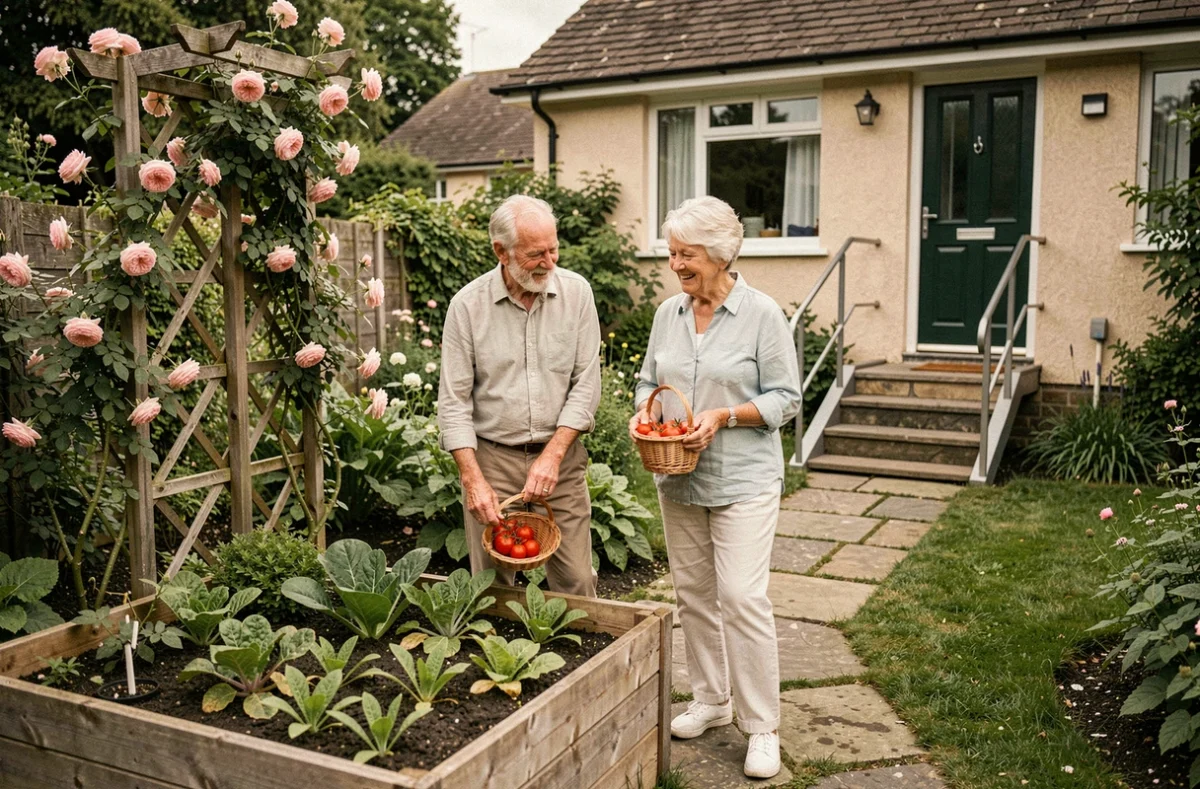
Aging well at home remains the priority for the vast majority of older people. But having a backup plan, talking about it openly and identifying possible facilities in advance can also bring peace of mind, both for the person concerned and for their loved ones.