
A poorly chosen promotional item ends up in a drawer or in the bin within weeks of being handed out. The problem isn’t the budget or the order quantity, but the lack of upfront analysis of how the product will actually be used and what will happen to it at the end of its life. A successful promotional products campaign requires a full lifecycle approach, from the supplier brief to the recipient’s last day of use.
End of life for promotional products: the criterion briefs overlook
An organic cotton tote bag or a stainless steel water bottle only becomes “sustainable” if the recipient uses it regularly. Labelling a product eco-friendly without checking whether it’s fit for purpose simply shifts the waste rather than eliminating it.
Before approving a design, three questions deserve documented answers: Does the recipient already own this item? Is the finish quality good enough to replace an existing item? And once worn out, can the product be disposed of through an accessible collection scheme?
Sustainability doesn’t guarantee a better reception if it comes at a higher price that the client offsets by compromising on print quality or the quantity distributed. A recycled pen with dry ink or a notebook with paper that’s too thin will be thrown away just as quickly as a plastic gadget. Comparing cost, actual usefulness and lifespan is more reliable than choosing a product based solely on an environmental claim.
Industry summaries confirm that consumers cite usefulness, design and quality among the reasons they keep a promotional item, and poor quality among the main reasons they get rid of one. Testing the finished product, including the branding, with a small panel before placing a large order can prevent entire batches of unused promotional items.
Environmental documentation and compliance for promotional products
Business buyers increasingly require tangible evidence before approving a supplier. Material composition, certifications and standardised test results should be included in the initial brief, not requested after delivery.
The European ESPR Regulation, which entered into force in July 2024, is paving the way for a digital product passport applicable to textiles. The 2025–2030 working plan envisages the indicative adoption of specific textile rules in 2027, although this date does not mean they will come into effect then. Teams ordering personalised clothing can already ask suppliers for traceable data on materials and origin, without waiting for a formal requirement.
Suppliers specialising in promotional products can help centralise these checks. The catalogues available at https://www.publidees.com cover several promotional product categories, with product sheets detailing materials and branding options.
What to include in the brief before placing an order
- The product’s exact composition (main material, inks, surface treatments) and relevant certifications (OEKO-TEX, FSC, GOTS, depending on the category).
- Branding test conditions: wash resistance for textiles, and print durability after several weeks of use for stationery or containers.
- The identified end-of-life route: deposit return, material recycling, industrial composting or, if none is available, a clear statement that the product is not recyclable as it stands.
Choosing a branding method that aligns with your communications strategy
The branding technique determines how long the message remains visually intact just as much as the choice of product does. Screen printing on textiles withstands washing better than a digital transfer, but it comes with limitations on colours and minimum print area. Pad printing works well on curved items (pens, mugs), producing precise results on small surfaces, while laser engraving offers virtually unlimited durability on metal or wood.
Choosing the branding method before choosing the product is a common mistake. The reverse process works better: identify the intended use, select a suitable product, then confirm that the personalisation technique is compatible with the material and printable area.
Match the quantity to the distribution context
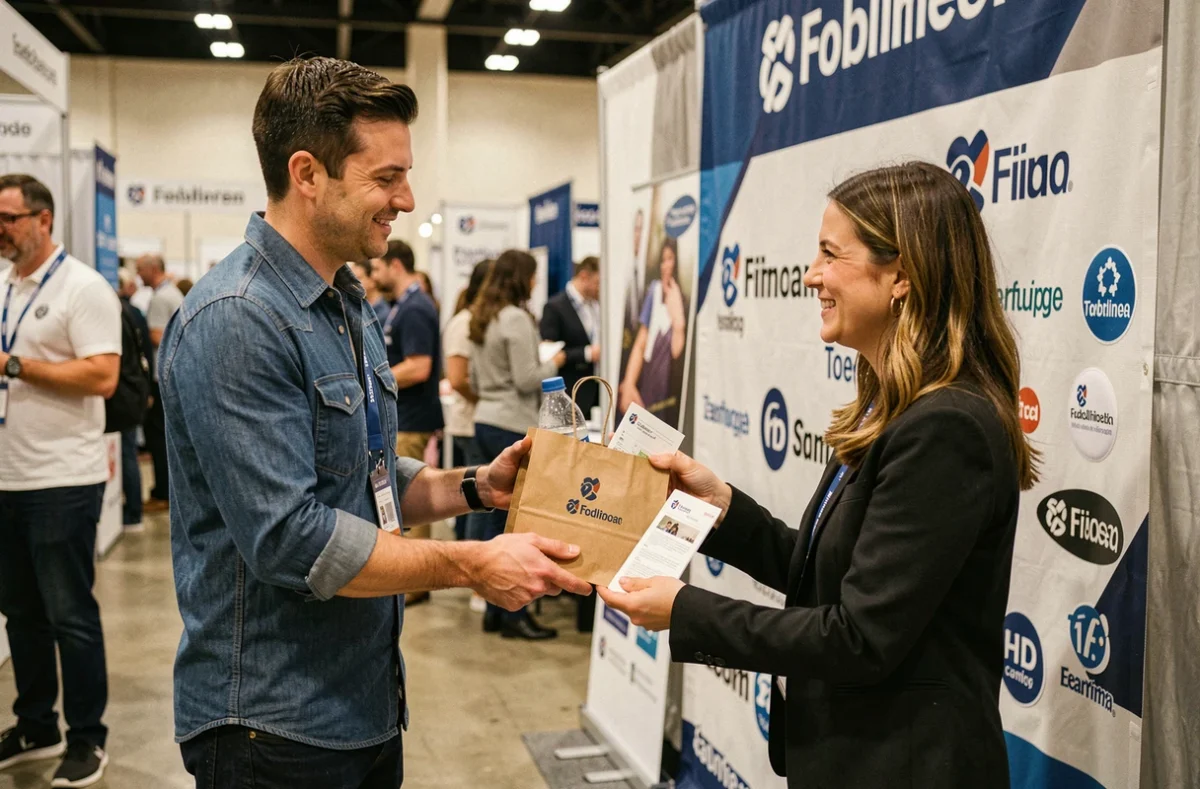
A trade show, a customer loyalty campaign and employee onboarding don’t call for the same products or quantities. At a trade show, the loss rate is high: choosing a compact item that’s immediately useful (notepad, charging cable, reusable badge holder) helps reduce waste.
For customer loyalty, a higher-quality item distributed in limited quantities makes a stronger impression and helps people remember the brand. The overall budget doesn’t necessarily change; it’s simply allocated differently between unit cost and quantity.
Measuring the return on investment of a promotional products campaign
Most promotional products campaigns aren’t measured after distribution. Without a metric, it’s impossible to know whether the item served its purpose as a communications tool or ended up in the bin.
- Adding a QR code or dedicated URL to the branding makes it possible to track scans and visits generated by the item, even several months after distribution.
- Surveying a sample of recipients four to six weeks after they receive the item, using a short form, provides an estimate of retention rates and frequency of use.
- Comparing the cost per remembered impression (total budget divided by the number of recipients who kept the item) with the cost per click of a digital campaign puts the figures into perspective.
A promotional item kept for several months generates repeated brand exposure in the recipient’s everyday environment—a mechanism digital advertising can’t replicate at the same cost. We recommend building a measurement method into every brief from the outset, even a basic one.
The effectiveness of a promotional products campaign isn’t determined at the point of distribution. It’s decided in the brief, when you weigh up the product’s actual usefulness, the quality of the branding and the ability to measure its impact once it’s in the recipient’s hands.