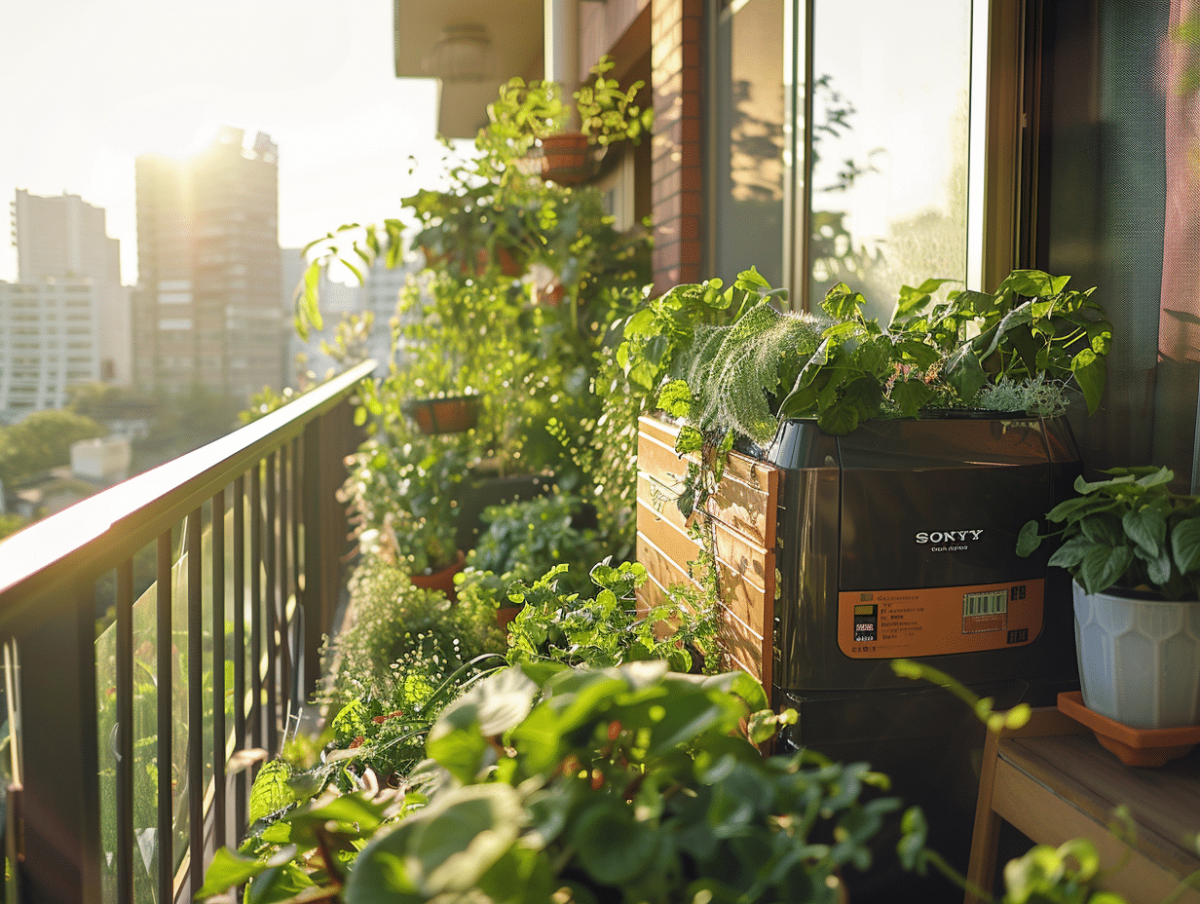
In the meanders of cities, where green spaces are rare and precious, the ecological commitment of urban dwellers often encounters logistical obstacles. Traditional composting methods, requiring vast areas, clash with urban density. This is where bokashi, a Japanese technique for fermenting organic waste, gains ground. This approach, adapted to the confined spaces of apartments and small gardens, offers a practical alternative for reducing carbon footprints. Bokashi invites a rethink of waste treatment at home, promising a rapid transformation of food scraps into a rich solid amendment, without foul odors, and with astonishing ease.
Bokashi: An Innovative Solution for Urban Composting
Urban composting finds a significant ally in bokashi. Designed to fit into the smallest kitchens, the Bokashi composter is a concrete response to the challenges of household waste management. Indeed, this mini composter not only reduces the waste footprint but also transforms waste into valuable resources. The Bokashi Composter, combined with the Bokashi biological activator made of microorganisms, allows for effective fermentation that prevents rotting and unpleasant odors. This process, distinct from simple decomposition, is at the heart of this technology revolutionizing urban composting.
Adopting bokashi as a composter in your home means choosing an environmentally friendly practice suited to urban life. Thanks to the brand Hozelock Pure, users have access to reliable equipment and an essential biological activator for the system’s proper functioning. The ease of use and compact design facilitate the integration of home composting into daily habits, without compromising the aesthetics or hygiene of the kitchen.
The Japanese urban compost, from which bokashi originates, demonstrates real effectiveness in reducing household waste. The Bokashi Composter can accommodate a variety of compostable waste, from fruits and vegetables to meats and cheeses, while simultaneously producing compost tea. This nutrient-rich liquid fertilizer is a valued by-product for plant care. The bokashi method thus establishes itself as an ecological practice, transforming food scraps into nutrient-rich compost and natural fertilizer for urban green spaces.

The Ecological and Practical Benefits of Bokashi Composting
Turning to bokashi composting represents a significant advancement in the valorization of organic waste. The method, by transforming food waste into resources, fully aligns with a sustainable development perspective. Users produce nutrient-rich compost, strengthening the soil and supporting urban soil biodiversity. The compost tea resulting from this method is a valuable liquid fertilizer for indoor plants and urban gardens, enhancing their growth and resilience against environmental stresses.
The distinction between compostable waste and non-compostable waste is clear. The Bokashi composter accommodates a wide range of organic waste, including those often excluded from traditional composters, such as meats, citrus peels, and cheese. This ability to manage such a diversity of organic materials is fundamental for effectively reducing the volume of household waste sent to landfills. Fluids, large bones, ashes, and animal excrement, on the other hand, must be excluded to ensure an optimal fermentation process without nuisances.
Using microorganisms for the fermentation of food waste is a science in itself. The bokashi biological activator is a catalyst that accelerates the conversion of waste into compost while preventing rotting and unpleasant odors. This management of food waste through fermentation is distinguished by its efficiency and speed, and has the advantage of being able to take place directly within the kitchen, without constraints of space or external conditions.