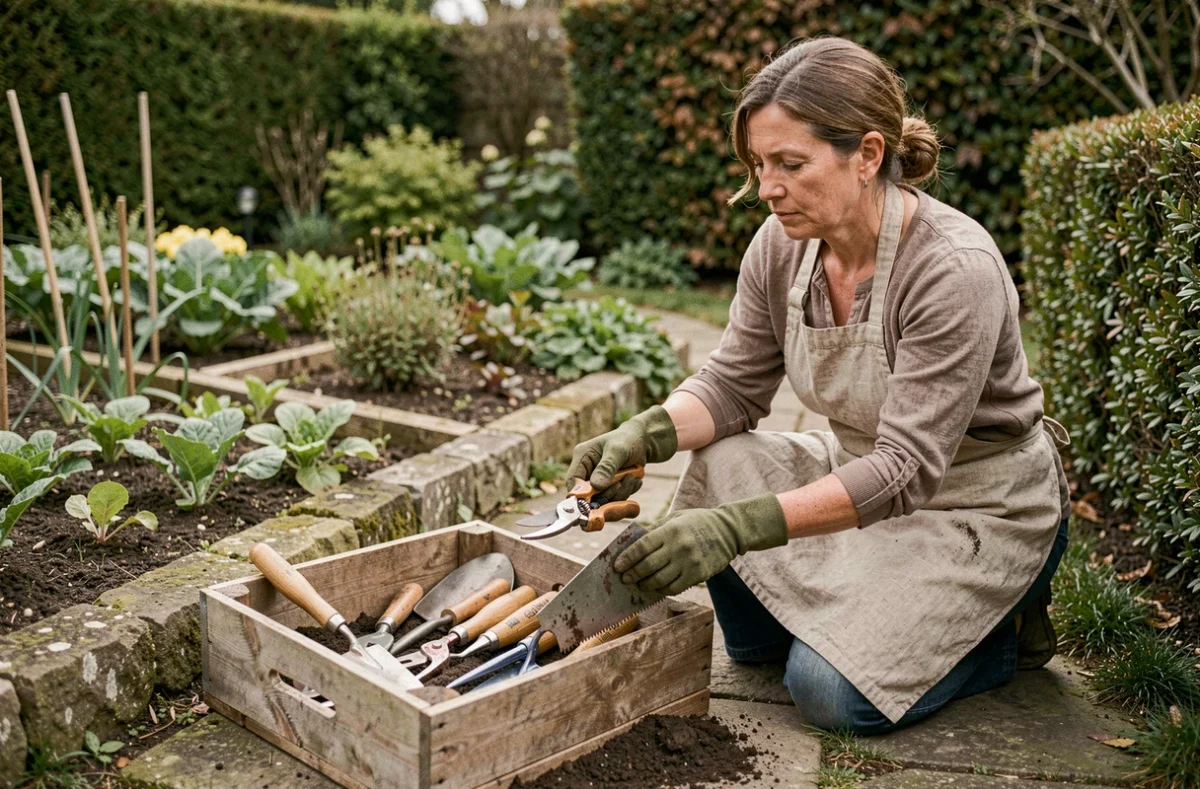
Choosing garden equipment is about more than ticking off a list of basic tools. Selecting the right equipment for maintaining and landscaping green spaces means weighing several technical factors, from the power source to local regulations and the true lifespan of batteries.
Noise regulations and batteries: two constraints to consider before making a purchase
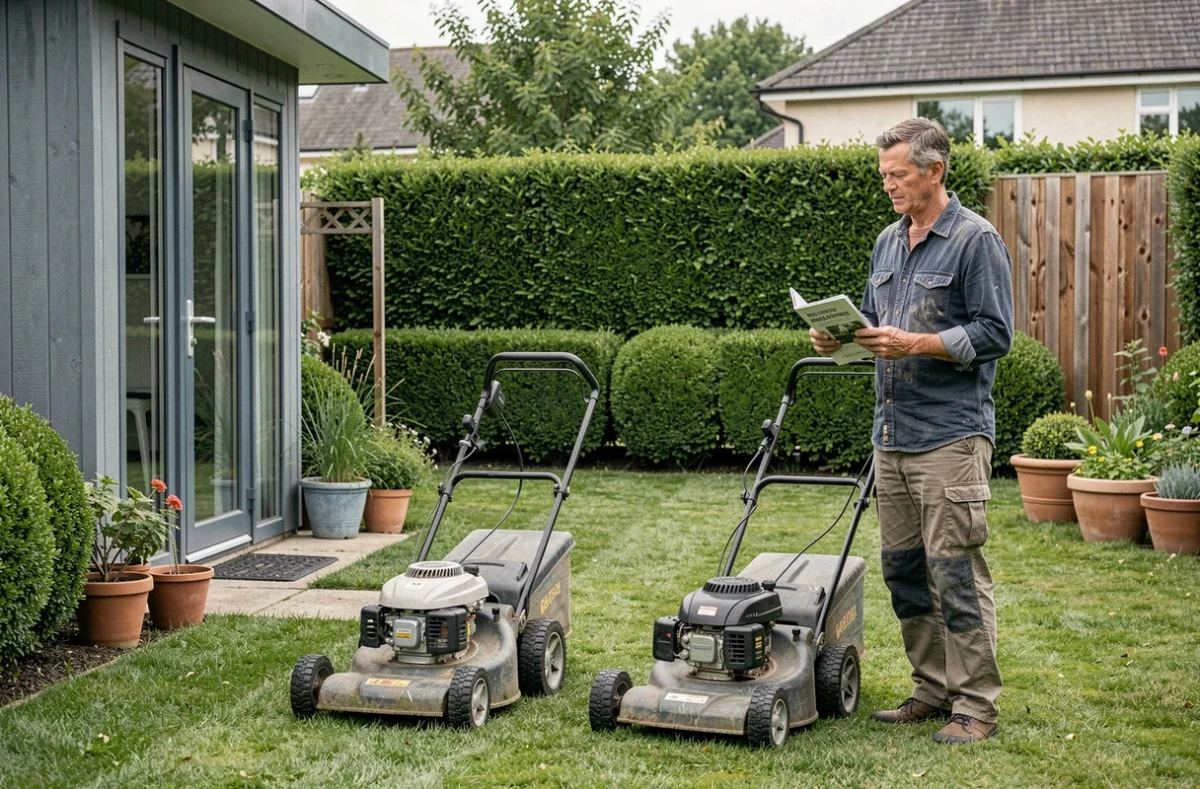
A powerful machine that cannot be used half the week is of little use. The hours when gardening tools may be used are not set nationally; they depend on municipal or prefectural orders. Before investing in a gas-powered leaf blower or lawn mower, we recommend checking your municipality’s rules and comparing the noise level in decibels of different models.
Corded electric or battery-powered equipment often stays below the thresholds that cause problems in densely populated residential areas, where an equivalent gas-powered model may be restricted to just a few time slots per day.
As for batteries, the European Battery Regulation will introduce removal and replacement requirements for certain portable batteries integrated into products from February 18, 2027. Replacement batteries will need to remain available for a defined minimum period. In practical terms, when buying any cordless tool from now on, check whether its battery can be replaced and is sold separately. A tool with a battery pack welded to its frame will become waste as soon as the cells start to fail.
Browse the equipment section on the Perspectives Jardin website to find product ranges organized by power source, making this initial technical selection easier.
Tools for pruning and soil preparation: prioritize versatility over quantity
Accumulating gardening tools does not guarantee effective maintenance. A small but well-coordinated set can handle most routine tasks in a medium-sized green space.
Soil preparation and planting
Soil preparation calls for two complementary types of tools. A digging fork or broadfork aerates the soil without turning over its layers, preserving microbial life. A cultivator or hand rake then breaks up surface clods before sowing or planting.
- A broadfork is suitable for soil that has already been worked or established vegetable gardens, but it has its limits in compacted clay soil that has never been loosened.
- A digging fork is more versatile for heavy soils, transplanting shrubs, or breaking up root-bound clods.
- A hand trowel and round-point shovel round out the set for occasional planting jobs, without overlapping functions.
Choosing between these tools comes down to identifying the dominant soil type in your garden and how often you work it. Two well-chosen tools can replace four generic ones.
Pruning
Anvil pruners are suitable for dry wood, while bypass pruners cut green stems without crushing the fibers. Confusing the two can damage plants and cause the blades to wear out prematurely. For branches over two centimeters in diameter, ratcheting or geared loppers multiply your cutting force without requiring a powered tool.
A sharp pair of bypass pruners handles most routine pruning. Investing in a replacement blade and spring can extend the tool’s life by several seasons.
Green waste management: an often-under-equipped area
Burning green waste is prohibited in France, subject to very limited local exemptions. This regulatory constraint directly affects your choice of equipment.
A lawn mower with a mulching function shreds grass clippings and returns them to the soil, reducing waste and nourishing the lawn. For shrub trimmings and branches, a garden shredder turns the waste into chips that can be reused as mulch or compost.
A garden shredder is the most cost-effective investment for a garden with hedges or fruit trees. Rotor models can handle thicker branches than blade models and are less prone to clogging. The choice between electric and gas-powered models ties back to the noise issue mentioned above: check your local restrictions on operating hours before deciding.
Watering and routine maintenance: match the system to the actual area
Watering can account for a significant share of water consumption. A buried soaker hose or drip irrigation system delivers water directly to the root zone with minimal evaporation, whereas an oscillating sprinkler sprays water over areas that may not be planted.
- For a vegetable garden or flower beds, drip irrigation with a timer reduces water use while keeping the soil consistently moist around the plants.
- For a lawn, a pop-up sprinkler can cover large areas but requires sufficient water pressure and precise range adjustment.
- For planters and window boxes, a micro-irrigation kit with its own reservoir helps prevent missed watering during the summer.
Choose routine maintenance equipment (rake, lawn rake, leaf blower) last, once the essentials are covered. A battery-powered leaf blower with variable speed is sufficient for most home gardens. Vacuum-shredder models combine leaf collection with volume reduction, but add weight and mechanical complexity.
Quality and durability criteria for garden equipment
An tool’s quality is reflected in its materials and design, not its list price. A handle made of ash wood or reinforced composite withstands impacts better than one made of soft pine with a varnish finish. Forged parts resist deformation better than stamped parts.
For powered tools, the availability of spare parts is just as important as power. A manufacturer that guarantees access to filters, belts, and blades for several years after purchase helps protect your investment. With European requirements for replaceable batteries set to take effect soon, this criterion will become even more important.
Maintaining hand tools after each use (cleaning, drying, and oiling metal parts) is the simplest way to prevent premature replacement. A well-maintained tool often lasts more than ten years, while neglected equipment can corrode within just a few seasons.